The Tyne doesn't hold still. Below Newcastle it runs tidal and salt-tinged; past Wylam it turns green and quick over gravel; at Tynemouth it meets the North Sea between two piers. Because of that range, you can watch a red-breasted merganser in December and a sand martin in April from the same stretch of riverside path. No permit, no long drive, no specialist kit beyond a decent pair of binoculars. What follows is a sense of what turns up and when, plus the small courtesies that keep it turning up.
Winter: diving ducks, sea ducks and waders (December to February)
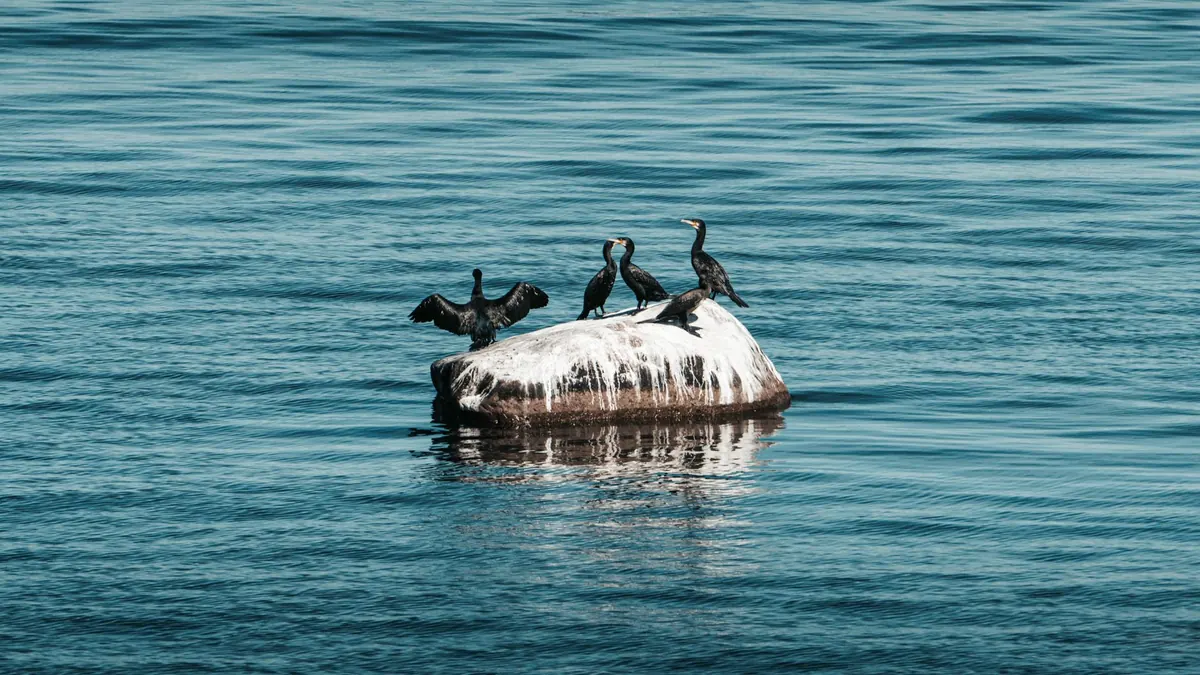
This is the river's quietest stretch for colour and its busiest for birds. On the tidal reach, anywhere from the Redheugh Bridge down to North Shields, look for goldeneye, red-breasted merganser and goosander. Goosanders hug the shallower runs near the bridges and slip under as you approach; mergansers stay out in the channel. Cormorants and shags dry their wings on the piers and around the Fish Quay, and eider gather in rafts off Cullercoats and the Tynemouth bathing pool.
On the coast, purple sandpipers are the winter prize. They feed in the splash zone on the rocks below the piers at Tynemouth and on the sea defences at South Shields, and you generally only see them once the tide pushes them up. Check a tide table and arrive an hour before high water. Turnstone work the same rocks, sanderling run the edge of Long Sands like clockwork toys, and out on the estuary flats curlew, oystercatcher, redshank, knot and dunlin feed at low tide then pack into tight, silent roosts as the water returns.
Inland, it's thrushes and, in a good berry year, waxwings. Redwing and fieldfare strip hawthorn along the Town Moor and the Derwent Walk. Waxwings turn up in suburban streets — Jesmond, Heaton, Gosforth, Whitley Bay — so keep half an eye on the berry trees outside supermarkets.
Spring: terns, warblers and the first salmon (March to May)
Around mid-March the Quayside changes noise. Kittiwakes return to the Tyne Bridge, the Guildhall and the Baltic, and their three-syllable call becomes the soundtrack of Newcastle's riverfront for the next six months. They come back to claim nest ledges, and the arguing starts almost at once.
On the water, salmon and sea trout begin moving up, and fish sometimes show below the bridges. Terns arrive to fish the estuary — sandwich terns first, then common and Arctic — hovering and plunging off North Shields and the pier ends. Sand martins appear over the water in March and April; watch for them darting into nesting holes in the sandy banks upstream of Wylam and Ovingham.
Along the banks, chiffchaff, blackcap and willow warbler start singing, and dippers carry food along the faster shallows of the upper river. It's also the season for passage birds: look up. Ospreys and red kites cross the valley on their way north, and a buzzard circling over the Derwent Walk is as likely to be a kite if the forked tail catches the light.
Summer: the Quayside colony and life offshore (June to August)
By June the kittiwake colony is at full volume, with chicks on ledges that seem far too narrow. The Tyne's Quayside group is one of the most inland kittiwake colonies in Britain, and it is genuinely strange and enjoyable to eat a sandwich while a seabird that most people associate with sea cliffs feeds its young above your head.
On calm days, harbour porpoise roll through the mouth of the river, usually a brief dark fin and a puff of breath rather than a show. Seals haul out on the rocks around the Black Middens and off St Mary's Island, and their numbers build through the autumn. Otters are increasingly found on the river, mostly upstream and mostly at dawn or dusk — a smooth brown back, then gone. Daubenton's bats hunt low over the water in the last of the light.
Autumn: migration, salmon runs and returning ducks (September to November)
Waders come back first: curlew, redshank and black-tailed godwits on the flats, knot and dunlin following. Winter ducks reappear from October, and the first goldeneye of the year is a reliable sign that the season has turned.
This is also when the river's salmon run is at its strongest, with sea trout close behind. Angling effort on the Tyne has risen over the years and runs are variable, but a walk along the weirs at Wylam, Riding Mill or Corbridge in October gives you a decent chance of seeing a fish launch itself at a pass. Terns and most kittiwakes leave as the weather breaks, and winter thrushes arrive on the first north-easterlies of late October.
Watching without disturbing
Most of the Tyne is accessible and heavily used, which makes the birds here moderately tolerant — but not endlessly so. A few habits make a real difference:
- Give roosts and nests space. Use binoculars rather than your feet. If birds lift off as you approach, you were already too close.
- Keep dogs close near the water in winter and during the breeding season. A dog running a roost or a nest site does more damage than a dozen quiet walkers.
- Stay off the mudflats. They're feeding and roosting grounds, and estuary mud is genuinely dangerous; the tide comes in fast and cuts off familiar ground.
- Don't feed bread to ducks and swans. It offers little nutrition and fouls the water. If you want to feed birds, use proper wildfowl food in small amounts, and never at a roost site.
- Leave seals alone. Watch from a distance, never block a route to the water, and keep away from anything that looks like a pupping site or a resting pup.
- Take line, hooks and litter home. Fishing line and plastic are among the most common causes of injury to river and coastal birds.
Disturbance in winter isn't a small thing. A wader pushed off its roost on a freezing afternoon burns energy it may not be able to replace before dark.
Planning your year on the river
Pick your spots by season. For winter wildfowl and waders, head for the Fish Quay, Tynemouth Pier and the South Shields sea front; for the Quayside kittiwakes, anywhere between the Redheugh and Millennium bridges; for sand martins, dippers and river walks, the paths around Ovingham, Wylam and the Derwent Walk. Morning light is best on the north bank, evening light on the south.
Check the tide table before any coastal visit, because the
Photo: Raul Ling / Pexels